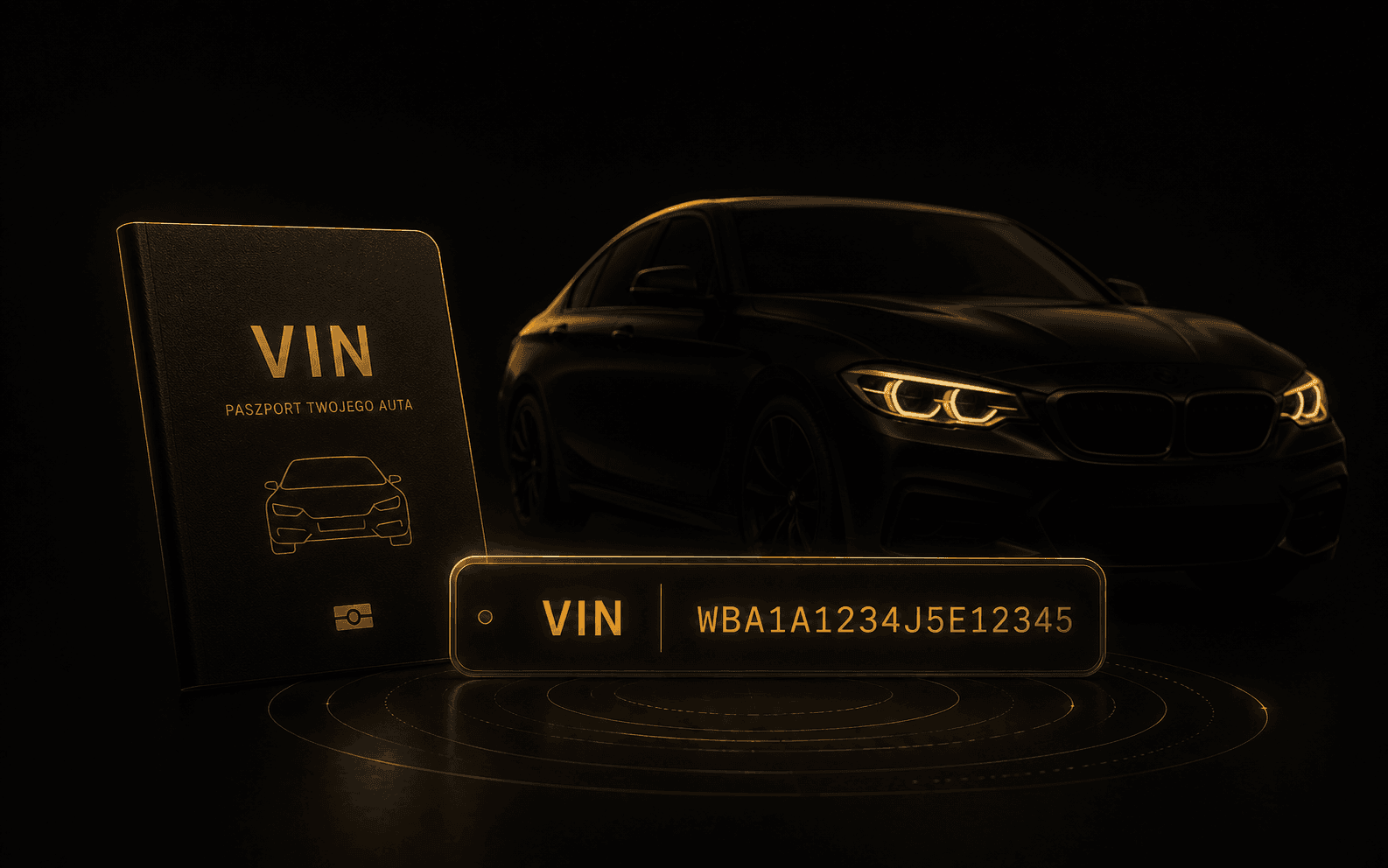
VIN Number - What It Is, Where to Find It and How to Check a Car History
VIN is 17 characters that tell the full story of a car. We explain what each section means, where to find it and how to check a car for free before buying.

What breaks on BMW E90 and F30, how much repairs cost and how to inspect a used example. Fault list with prices and a pre-purchase checklist - straight talk.
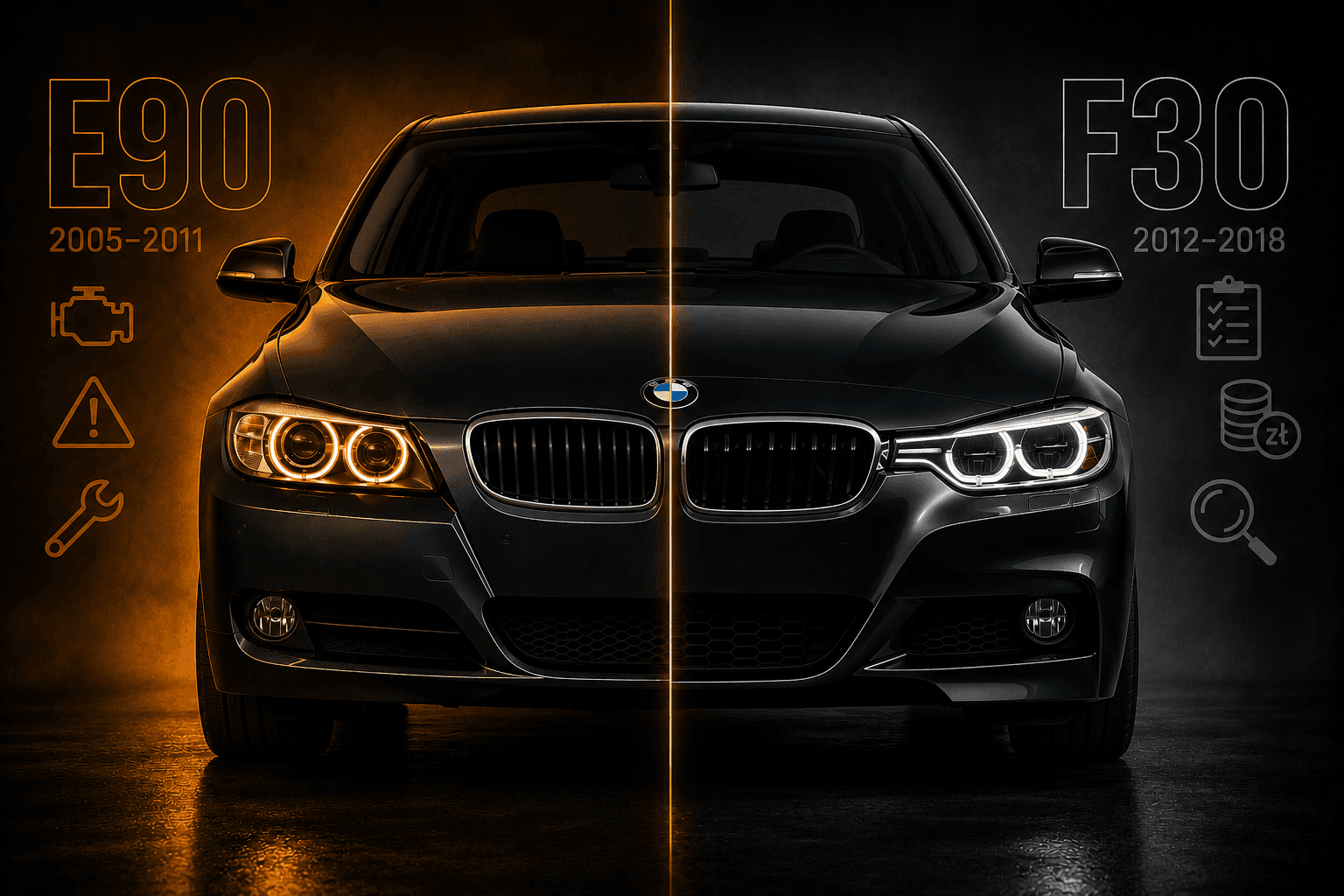
The BMW 3 Series is one of the most commonly bought used cars in Poland - OtoMoto consistently lists over 3,000 active ads. A large selection is good news. The bad news: that same pool includes a lot of cars with history the seller would rather keep to themselves.
Before we get to the faults - a quick orientation on the generations:
| Generation | Production years | Budget on OtoMoto |
|---|---|---|
| E90 (saloon) / E91 (Touring) | 2004–2011 | PLN 18,000–45,000 |
| F30 (saloon) / F31 (Touring) | 2012–2018 | PLN 35,000–80,000 |
E90 - more mechanical, easier to DIY service, cheaper parts. Downsides: higher average mileage, greater risk of undocumented history.
F30 - more modern electronics, more efficient engines, better passive safety. Downsides: more expensive repairs, more ex-fleet examples (taxis, long-term rental).
Both generations share one serious common problem - the timing chain.
Timing chain (N43, N46, N45 engines)
The most common and most expensive E90 problem. The chain tensioner wears prematurely - left untreated, it ends with chain failure and engine destruction. Symptom: a dull metallic rattle on a cold engine that disappears once the engine reaches operating temperature.
Engines with the factory tensioner update (N43 post-2009) carry lower risk, but aren't immune.
Repair cost: PLN 2,500–4,500 (chain + tensioners + labour).
Oil consumption (N52, N53 engines)
The 2.5 and 3.0 petrol units can burn 1 litre of oil per 2,000–3,000 km at higher mileages. BMW officially accepted a norm of up to 1 L/1,000 km - which in practice means monthly top-ups for the owner.
Before viewing, check the oil level cold. Clean engine on the outside + low level = the seller is hiding consumption.
Wishbones and suspension bushings
The E90's front suspension needs bushing replacement every 80,000–120,000 km. On Polish roads, often sooner. Symptom: dull thuds from the front over bumps, instability under braking.
Cost: PLN 800–1,600 per axle (Lemförder or Meyle instead of OEM is a sensible option).
Rust on sills and wheel arches
Particularly on 2004–2007 examples. Inspect the sills and lower wheel arch edges from underneath - best done on a lift. Deep sill rust is a structural problem that runs into thousands of zloty.
Timing chain (N20 engine)
History repeating. The N20 engine (2.0 petrol - the most popular in 318i and 320i) has the same tensioner problem as the E90. Examples produced before 2015 are in the risk group. BMW issued a tensioner update, but it's not retroactive.
A rattle on a cold engine = immediate diagnostics before you make any decision.
Repair cost: PLN 3,000–5,000.
Common rail injectors (318d, 320d diesels)
The F30 diesel is the most common fleet choice. After 150,000–180,000 km, the common rail injectors start to wear - symptoms are uneven idle and increased smoke on a cold start.
Cost: injector reconditioning PLN 300–600 per unit (4 units = PLN 1,200–2,400), new OEM PLN 2,000–3,500 for a set.
DPF and EGR (diesels)
The diesel particulate filter clogs up with city driving. Cleaning: PLN 500–1,200. Replacement: PLN 2,500–5,000 (OEM). EGR valve: additional PLN 1,000–2,000.
If the seller mentions regular "chemical DPF cleaning" - ask for invoices. No documentation means: treat the DPF as clogged.
Electronics and diagnostics
The F30 has a full electrical architecture - iDrive 4.0/5.0, BST modules, FRM, BCM faults. For a complete fault readout you need the ISTA tool or the Carly app. A cheap OBD2 scanner from an online marketplace will only show you a fraction of the faults.
Ask the seller for an ISTA diagnostic printout - or run one yourself before viewing.
Shock absorbers
At 100,000–130,000 km, the F30's shock absorbers lose effectiveness. Replacement: PLN 1,200–2,200 per axle (Bilstein B4 or Sachs - don't buy the cheapest aftermarket units for a BMW).
Estimates below are for a good-condition example driven 15,000–20,000 km per year:
| Item | E90 per year | F30 per year |
|---|---|---|
| Regular service (oil + filters) | PLN 600–900 | PLN 700–1,100 |
| Tyres (seasonal changeover) | PLN 400–700 | PLN 400–700 |
| Brakes (every 2 years) | PLN 600–1,200 | PLN 800–1,500 |
| Unexpected repairs | PLN 1,500–3,000 | PLN 2,000–4,000 |
| Total excluding insurance | PLN 3,100–5,800 | PLN 3,900–7,300 |
Insurance is on top of this. Third party + comprehensive for a BMW 3 Series typically runs PLN 2,500–5,500 per year - depending on the year, claim history and region. Worth knowing before you sign.
On Mubi (a Polish insurance comparison service) you can compare third-party and comprehensive quotes for a specific year and engine in 3 minutes - no personal data required. A policy for an F30 320i from 2015 can cost 40% more than the seller estimated verbally. Better to know that before viewing than the day after signing.
1. VIN report
Every E90 or F30 imported from Germany, Belgium or the Netherlands should be checked via CarVertical. Many of these cars carry foreign accident history that simply doesn't exist in CEPiK. Report cost: approx. €29. Value of potential hidden damage: thousands.
Not sure how to read a VIN or what CEPiK actually checks? This article explains it step by step.
2. Cold engine start
Arrive when the car has been standing for at least 4 hours. Timing chain rattle is only audible on a cold engine - it disappears once warm. A seller who "just happens to be warming the car up" when you arrive is doing it deliberately.
3. Computer diagnostics
Ask for an ISTA printout or run one yourself with the Carly app (approx. €12/month on iOS/Android). Check for injector faults, DPF codes, air conditioning errors and suspension warnings.
4. Service history
For an F30 with main dealer history: ask for a printout from the BMW system or stamps in the service book. For an E90: specialist garage invoices are fine - don't demand dealer-only history on a 2007 car.
5. Underside inspection
Rust on the E90's longitudinal members is a disqualifier. The F30 holds up better, but inspect the shock absorber mounts and sills at the engine bay. Ask to view the car on a lift - a refusal is a red flag.
6. Test drive above 80 km/h
Steering wheel vibration (unbalanced wheels or worn tyres), jerking under acceleration (automatic gearbox), a hum from the rear axle at steady speed - these only reveal themselves at higher speeds.
The BMW 3 Series can be one of the best used-car purchases on the market - if you find the right example. With good history, a properly serviced engine and a verified VIN, you can drive it another 100,000 km without major outlay. You can also buy a problem for PLN 50,000 that costs as much again within a year.
The difference? A few minutes of checking before signing.
VIN is 17 characters that tell the full story of a car. We explain what each section means, where to find it and how to check a car for free before buying.
The Polish used-car market is a minefield. From 47 AI reports we extracted 10 red flags that should immediately stop you before scheduling a viewing.